
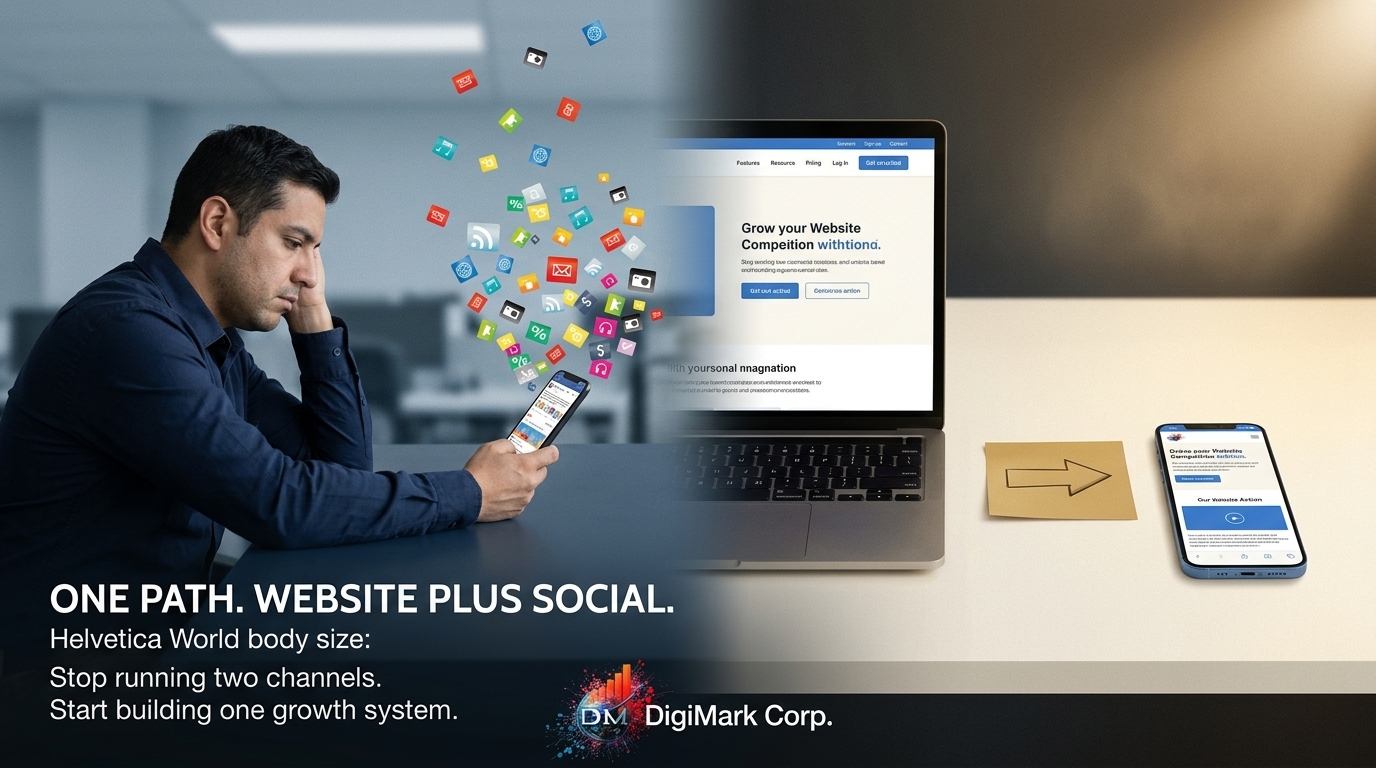
You’re pouring time into social media and your website, but leads aren’t following. The clicks come fast, yet momentum stalls because your site and socials tell different stories. When you treat your website and social media as one connected growth path, each channel builds on the other, turning scattered attention into clear, measurable leads. Let’s explore how aligning these pieces creates a smoother, stronger path to sales—and why that shift matters more than ever today. Read more.
Stop Splitting Your Funnel
You’re pouring time into social media and your website, but leads aren’t following. The clicks come fast, yet momentum stalls because your site and socials tell different stories. When you treat your website and social media as one connected growth path, each channel builds on the other, turning scattered attention into clear, measurable leads. Let’s explore how aligning these pieces creates a smoother, stronger path to sales—and why that shift matters more than ever today.
The Cost of Fragmented Channels
Fragmented channels can create confusion, making it hard for potential customers to take the next step. When your website and social media do not align, you lose the momentum needed to convert interest into action.
A mismatched message across channels leads to missed opportunities. Imagine a visitor intrigued by a social media post but confused when your website does not reflect the same message. This disconnect can stall their journey. Studies show that consistent messaging across channels boosts conversion rates by up to 23%. If your channels are not working together, you are likely missing out on those potential gains.
Aligning your website and social media creates a seamless path for your audience. It ensures that when visitors move from one channel to another, they encounter a cohesive narrative that guides them toward conversion. By integrating these channels, you turn casual interest into committed action.
Building a Unified Conversion Path
Creating a unified conversion path starts with aligning your goals and messages across all platforms. This approach helps in creating a clear and compelling journey for your audience, leading to increased sales.
Start by identifying the core message you want to convey. Ensure that this message is consistently reflected in both your website and social media. For example, if your goal is to promote a new product, your social media posts should highlight its benefits, while your website provides detailed information and purchasing options. Consistent messaging helps build trust and makes it easier for potential customers to navigate your content.
Next, use data to refine and adjust your strategy. Research indicates that businesses that use data-driven marketing experience better engagement and higher conversion rates. By analyzing how users interact with your content, you can make informed adjustments that optimize the customer journey.
Connecting Website and Social Media
To effectively connect your website and social media, it’s crucial to align your goals and messages and create a cohesive customer journey. This connection boosts engagement and conversions.
Aligning Goals and Messages
Aligning goals and messages starts with a clear understanding of what you want to achieve. Whether it’s increasing sales, generating leads, or building brand awareness, your goals should be consistent across all channels.
Start by identifying your primary objective. Ensure that both your website and social media are geared towards achieving this goal. For instance, if your aim is to increase newsletter sign-ups, your social media posts should encourage followers to visit your website, where they can easily find and complete the sign-up form.
Leveraging analytics helps in assessing the effectiveness of your messaging. Tools like Google Analytics can provide insights into user behavior, helping you refine your strategy. By measuring the impact of your efforts, you can ensure that your channels are working together to drive the desired outcomes.
Creating a Cohesive Customer Journey
A cohesive customer journey guides visitors smoothly from awareness to action. This journey should be intuitive, making it easy for users to understand what steps to take next.
Begin by mapping out the customer journey. Identify touchpoints where users might interact with your brand, from social media posts to landing pages on your website. Ensure that each touchpoint provides clear guidance on what to do next. For example, a social media post might link directly to a relevant blog post or product page on your website.
Consistency is key. Ensure that your branding, tone, and messaging remain the same across all channels. A consistent experience builds trust and encourages users to continue engaging with your brand. This approach not only enhances user experience but also increases the likelihood of conversion.
Growing Faster with Integration
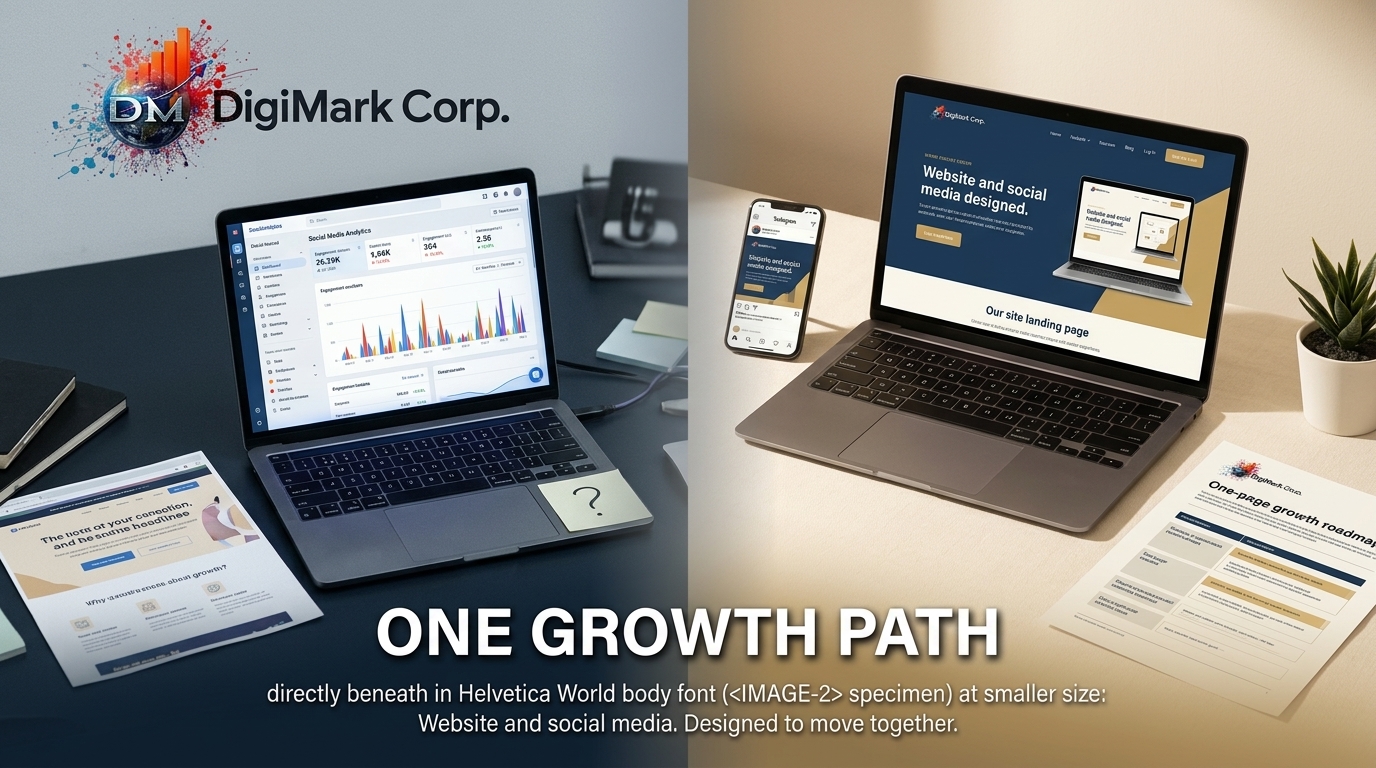
When your website and social media function as one, you create a powerful growth engine. A connected approach accelerates lead generation and conversion.
Benefits of a Connected Growth Path
A connected growth path offers numerous benefits, including increased engagement, higher conversion rates, and improved ROI. By treating your website and social media as one system, you create a more efficient and effective marketing strategy.
An integrated approach ensures that each channel supports and reinforces the others. When your social media posts drive traffic to a well-optimized website, you increase the chances of conversion. This synergy not only improves user experience but also boosts your bottom line.
Data-driven insights play a crucial role in optimizing your growth path. By analyzing how users interact with your content, you can make informed decisions that enhance performance. This continuous improvement process helps you stay ahead in a competitive landscape.
Customizing for Business Growth Goals
Customization allows you to tailor your strategy to meet specific business growth goals. This flexibility ensures that your marketing efforts align with your unique needs and objectives.
Begin by identifying your specific growth goals. Whether it’s increasing sales, boosting brand awareness, or expanding your customer base, your strategy should be designed to achieve these objectives. Customize your website and social media content to reflect these goals, ensuring that each channel plays a role in driving success.
Utilize tools like multi-channel attribution to measure the impact of your efforts. This approach helps in identifying which channels are most effective in driving conversions, allowing you to allocate resources more efficiently. By focusing on what works, you can achieve sustainable growth.
Frequently Asked Questions
-
Why is it important to align website and social media?
Aligning your website and social media ensures a consistent message across all platforms. This consistency builds trust, enhances user experience, and drives higher conversion rates.
-
How can a connected growth path improve ROI?
A connected growth path ensures that all marketing efforts are aligned, leading to more efficient use of resources. This alignment boosts engagement and conversions, ultimately improving ROI.
-
What role does data play in integrating website and social media?
Data provides insights into user behavior, helping you refine your strategy. By analyzing how users interact with your content, you can make informed decisions that optimize performance and enhance the customer journey.
-
How can I customize my marketing strategy to meet specific goals?
Start by identifying your specific growth goals, such as increasing sales or brand awareness. Customize your website and social media content to reflect these goals, ensuring that each channel contributes to your overall strategy.