Integrated digital marketing assigns clear roles to channels like web design, SEO, PPC, content, social, and email, focusing on measurable growth, ROI, and data-driven budget justification.
Social media sparks interest, but a well-designed website converts visitors into customers. Aligning both with clear calls-to-action and unified messaging drives seamless engagement and business growth.
Align your website and social media for a unified growth path to boost engagement, ensure consistent messaging, enhance user experience, and increase conversions using data-driven strategies.
Integrate your website and social media into a unified growth path to reduce friction, enhance buyer journey flow, and boost conversions using data-driven strategies and performance tracking.
Integrate your website and social media into one measurable path to purchase. Align content, optimize conversion funnels, use UTM tracking and GA4 for data-driven marketing success and growth.
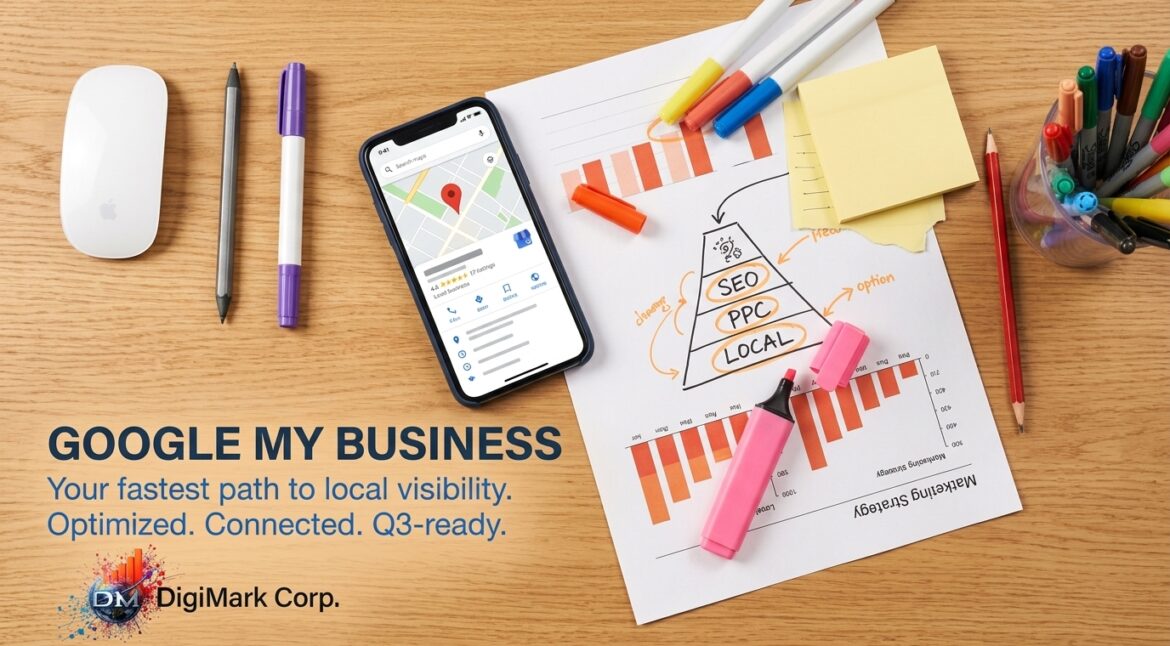
Optimize your Google Business Profile by ensuring NAP consistency, engaging posts, reviews, and integration with SEO, PPC, and web design to boost local demand and drive growth into Q3.
Optimize your Google Business Profile now to boost local SEO, increase visibility, and drive leads fast. Integrate with SEO and web design for Q3 growth and stronger customer engagement.
Align SEO, web design, and multi-channel marketing into a measurable Q3 growth system. Use audits, clear KPIs, and dashboards to turn vague efforts into focused, data-driven strategies for better visibility, conversion, and sustained growth.
Create a Q2 marketing plan with a custom growth roadmap aligning SEO, PPC, content, and email to clear business goals. Use data-driven strategies, KPIs, and integrated channels for efficient, measurable growth.
Affordable website design focuses on building conversion-driven, SEO-ready sites that support lead generation and growth. Prioritize usability, mobile optimization, data-driven improvements, and integrated marketing for lasting results.
Contains information related to marketing campaigns of the user. These are shared with Google AdWords / Google Ads when the Google Ads and Google Analytics accounts are linked together.
90 days
__utma
ID used to identify users and sessions
2 years after last activity
__utmt
Used to monitor number of Google Analytics server requests
10 minutes
__utmb
Used to distinguish new sessions and visits. This cookie is set when the GA.js javascript library is loaded and there is no existing __utmb cookie. The cookie is updated every time data is sent to the Google Analytics server.
30 minutes after last activity
__utmc
Used only with old Urchin versions of Google Analytics and not with GA.js. Was used to distinguish between new sessions and visits at the end of a session.
End of session (browser)
__utmz
Contains information about the traffic source or campaign that directed user to the website. The cookie is set when the GA.js javascript is loaded and updated when data is sent to the Google Anaytics server
6 months after last activity
__utmv
Contains custom information set by the web developer via the _setCustomVar method in Google Analytics. This cookie is updated every time new data is sent to the Google Analytics server.
2 years after last activity
__utmx
Used to determine whether a user is included in an A / B or Multivariate test.
18 months
_ga
ID used to identify users
2 years
_gali
Used by Google Analytics to determine which links on a page are being clicked
30 seconds
_ga_
ID used to identify users
2 years
_gid
ID used to identify users for 24 hours after last activity
24 hours
_gat
Used to monitor number of Google Analytics server requests when using Google Tag Manager
1 minute
You can find more information in our Cookie Policy and .