
Harvard free online courses grab attention like nothing else. But what if that interest never turns into real business growth? The truth is, useful content only starts the conversation—your marketing funnel closes the deal. Let’s look at how turning curiosity into conversion creates a clear path for measurable demand and sustainable growth.
For a comprehensive guide on aligning your marketing channels, explore How to Create a Digital Marketing Strategy: Start with Outcomes, Connect Every Channel.
The Hook of Free Education
Curiosity leads many to explore Harvard’s free courses, capturing imaginations with the promise of prestige. Yet, this interest alone doesn’t drive growth. It’s crucial to connect the dots from curiosity to tangible business outcomes.
Curiosity and Prestige
Harvard free online courses are like a magnet, attracting those eager to learn. Their prestige gives an immediate allure, drawing in a diverse audience. But in the business world, this initial spark isn’t enough. You need more than just curiosity to make a difference. For many, the question isn’t whether these courses are interesting, but how to harness this interest to create real value and growth.
Prestige can open doors, but it doesn’t close sales. Most people think awareness alone drives success, but capturing attention is just the first step. The real challenge lies in converting that attention into measurable demand. Without a clear strategy, the initial curiosity fades, leaving potential untapped.
The Limitations of Learning Alone
Relying solely on free courses for growth resembles building a house on sand. Knowledge without a plan fails to materialize into results. Consider businesses that invest in educational content but see no uptick in revenue. They often lack a framework to guide eager learners down a path towards becoming customers.
In today’s competitive market, it’s not just about offering free education. It’s about creating a seamless path from interest to investment. Without connecting the dots to a broader strategy, knowledge remains just that—unutilized insight. The longer you wait to structure this journey, the more opportunities slip away.
Turning Interest Into Revenue

To truly benefit from the interest sparked by educational content, businesses must bridge the gap from curiosity to conversion. This involves crafting a strategy that turns initial interest into revenue.
Content to Conversion Strategy
The key to transforming interest into revenue lies in a well-crafted strategy. Start by tailoring content to guide potential customers through a journey. This begins with grabbing attention through intriguing content and ends with a call to action that feels like a natural next step.
Use data to understand what your audience values. Develop content that not only educates but also leads prospects down a conversion path. For example, if a user engages with educational content, follow up with targeted emails that highlight how your services can address their specific needs. This isn’t just theory; businesses that adopt this approach often see a noticeable increase in conversions.
Full-Funnel Marketing Success
A full-funnel strategy ensures that interest doesn’t just fizzle out. By nurturing leads at each stage, from awareness to decision, businesses can convert curiosity into concrete action. This comprehensive approach involves integrating multiple channels—SEO, PPC, content marketing, and more—into a cohesive plan.
Consider how SEO can capture top-of-funnel traffic and PPC can deliver immediate leads. Combine this with content that educates and nurtures, and you create a powerful engine for growth. The result? A seamless journey from first contact to conversion, maximizing the potential of every interested lead.
Structuring Growth With DigiMark
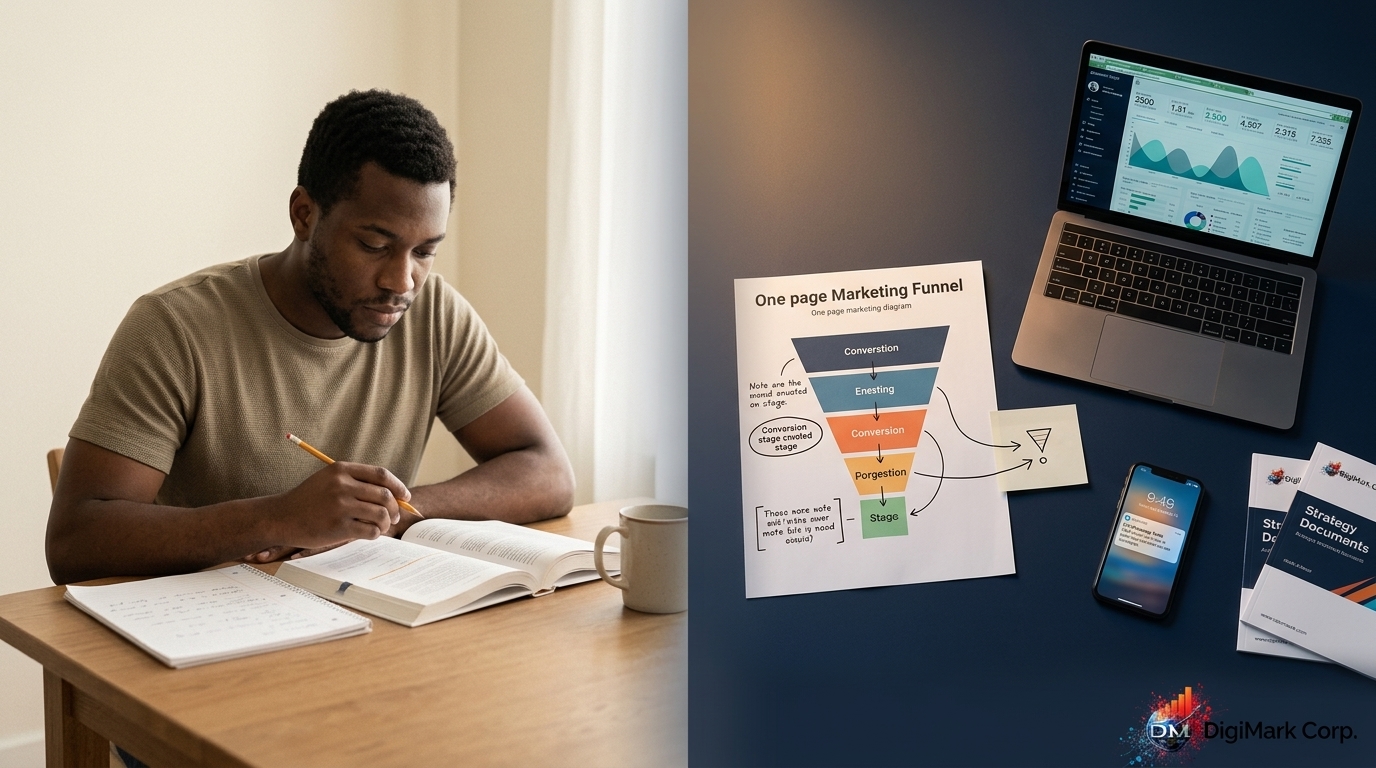
DigiMark specializes in structuring growth by integrating various marketing channels into a cohesive system. This means connecting the dots between SEO, PPC, and email to ensure sustainable, measurable growth.
SEO and PPC Integration
SEO and PPC aren’t standalone tactics; they’re partners in success. SEO builds a foundation for long-term visibility, while PPC delivers quick wins. Together, they form a powerful combination that captures interest and drives it towards conversion.
When executed well, these strategies ensure that your business remains visible at every stage of the customer journey. SEO attracts interested users, while PPC captures them when they’re ready to act. This synergy is critical for businesses looking to maximize their marketing funnel strategy. The integration of these channels ensures a continuous flow of qualified leads.
Email Automation for Growth
Email automation turns interest into action by nurturing leads over time. Automated campaigns can send tailored messages based on user behavior, ensuring that potential customers receive the right message at the right time.
For instance, if someone engages with a specific piece of content, a follow-up email can offer additional insights or a special offer. This personalized approach not only keeps your brand top-of-mind but also encourages conversions. By incorporating email automation, businesses can maintain engagement and move prospects through their lead nurturing journey efficiently.
Frequently Asked Questions
What makes Harvard’s free courses appealing to businesses?
Harvard’s free courses attract attention due to their prestige and the promise of high-quality learning. This initial interest can be a powerful tool for businesses looking to engage curious audiences.
How can businesses convert educational interest into revenue?
Businesses need a structured plan that guides curious users through a conversion-focused journey. Combining content marketing with a full-funnel strategy helps turn interest into measurable demand.
What role does SEO and PPC play in a conversion strategy?
SEO and PPC are critical for capturing and converting interest. SEO builds long-term visibility, while PPC delivers immediate traffic and leads. Together, they create a balanced approach to drive conversions.
Why is email automation important for growth?
Email automation keeps potential customers engaged and guides them through the conversion process. By sending personalized messages based on user behavior, businesses can nurture leads and drive conversions efficiently.