
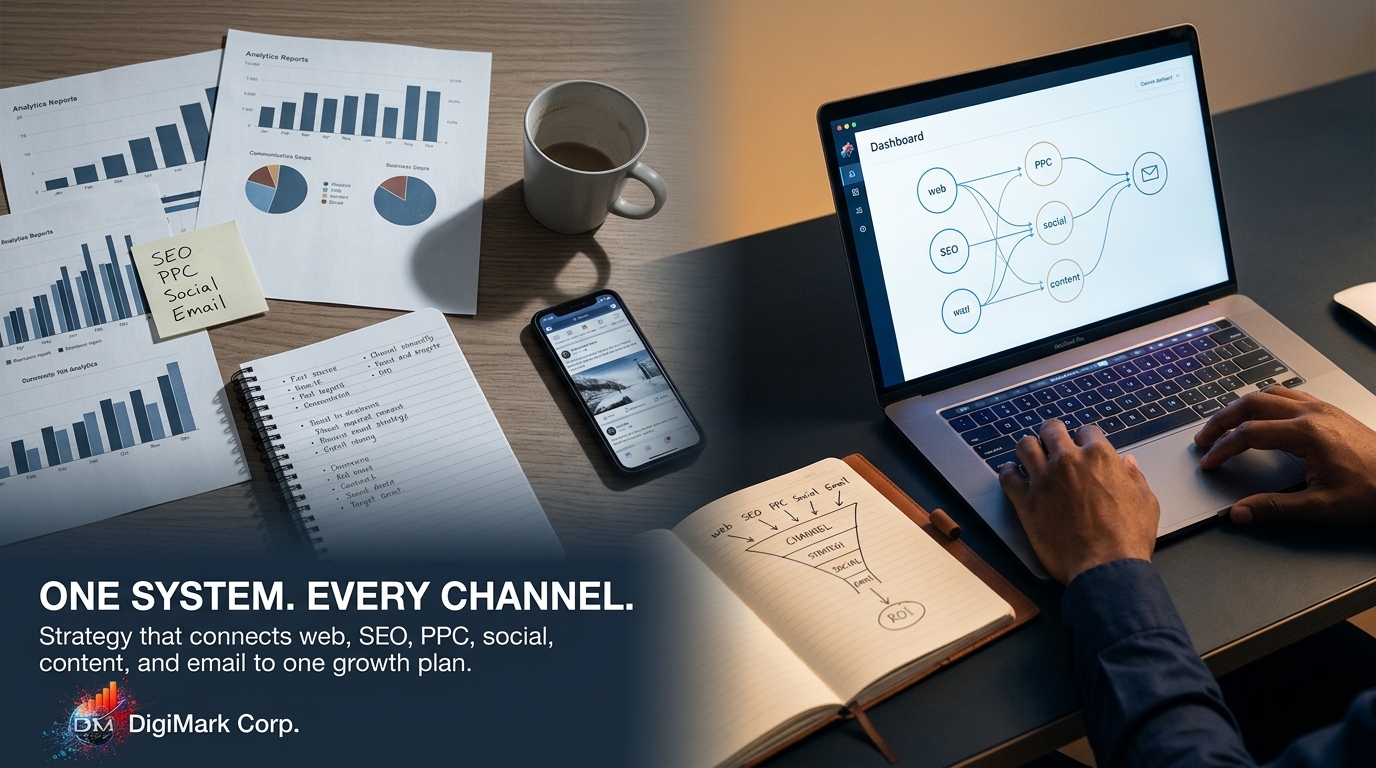
Marketing feels busy but unclear. You see web, SEO, PPC, social, content, and email running, yet results don’t add up. A digital marketing strategist connects these channels into one system, creating a clear path from first touch to measurable growth. When every channel earns its role in your funnel, your spend turns into real, compounding ROI. Let’s explore how combining these pieces delivers a focused, accountable strategy built for your business goals. For a deep dive into creating a digital marketing strategy that starts with outcomes and connects every channel, consider exploring this guide.
The Power of Unified Marketing
A digital marketing strategist is your guide to converting fragmented efforts into a unified system. This approach transforms your marketing from mere activity into a strategic, ROI-driven powerhouse.
Breaking Away from Fragmentation
Are your marketing channels working together like a well-oiled machine or operating in silos? Most businesses find their efforts scattered. Each channel seems busy, but the results don’t stack up. This happens when web design, SEO, PPC, social media, content, and email marketing aren’t connected. When these channels work independently, they miss the chance to amplify each other’s impact. The solution? A strategist who unifies these elements into one seamless system. This method ensures every effort is pulling in the same direction, towards measurable growth.
Why Strategy Trumps Tactics
Strategy is the blueprint for success. Without it, you’re shooting in the dark. Tactics might yield short-term wins but lack long-term vision. A well-crafted strategy aligns every channel with your business goals. It’s not just about being busy; it’s about being effective. A strategy-first approach ensures resources are wisely allocated and every action contributes to the overall objective. This way, you don’t just see activity; you see results.
Connecting Channels to ROI
Each marketing channel should justify its role in your ROI system. This requires a clear understanding of how web design, SEO, PPC, and other efforts contribute to the bottom line. A digital marketing strategist brings this clarity. They track, measure, and optimize each channel’s performance, ensuring that your marketing spend translates into tangible returns. By connecting the dots, businesses can## The Power of Unified Marketing
Feeling overwhelmed by fragmented marketing efforts is common. This section explains how unifying your marketing can change the game.
Breaking Away from Fragmentation
Most businesses run multiple marketing channels without a clear connection. This scattergun approach often leads to wasted effort and budget. Imagine instead, a system where all channels work together. This creates a seamless journey for your customers, making them more likely to engage and convert. The key is to integrate these channels into one cohesive strategy.
Why Strategy Trumps Tactics
Focusing solely on tactics like PPC or social media can be tempting. Yet, without a guiding strategy, these efforts can lack direction. A solid strategy aligns every action with your business goals. It turns isolated efforts into a powerful, unified force. This strategic approach ensures you’re not just busy, but also effective in driving growth.
Connecting Channels to ROI
At the heart of unified marketing is the connection to ROI. When each channel contributes to a shared goal, measuring success becomes easier. You can see how every dollar spent leads to growth. This connection turns marketing from a cost center into a revenue driver, showing clear returns on your investment.
Building an Integrated Marketing Strategy
Once you understand the power of unification, the next step is building an integrated strategy. Here’s where a digital marketing strategist becomes essential.
The Role of a Digital Marketing Strategist
A digital marketing strategist acts as the conductor of your marketing orchestra. They ensure every channel plays its part in the larger symphony. Their expertise lies in connecting diverse marketing tactics to business outcomes. This strategic oversight turns chaos into a coordinated effort, driving consistent results across the board.
Developing a Multi-Channel Marketing Plan
Creating a multi-channel plan requires careful planning. Start by understanding your audience and setting clear goals. Then, map out how each channel can contribute to these goals. This plan should be flexible, allowing for adjustments based on performance data. The result is a dynamic strategy that adapts to your needs and market changes.
Prioritizing Quick Wins and Long-Term Gains
Balancing immediate results with future growth is crucial. Quick wins can boost morale and demonstrate progress. Meanwhile, long-term gains ensure sustainability. A skilled strategist knows how to balance these, ensuring you see benefits now while setting the stage for future success.
Achieving Measurable Growth
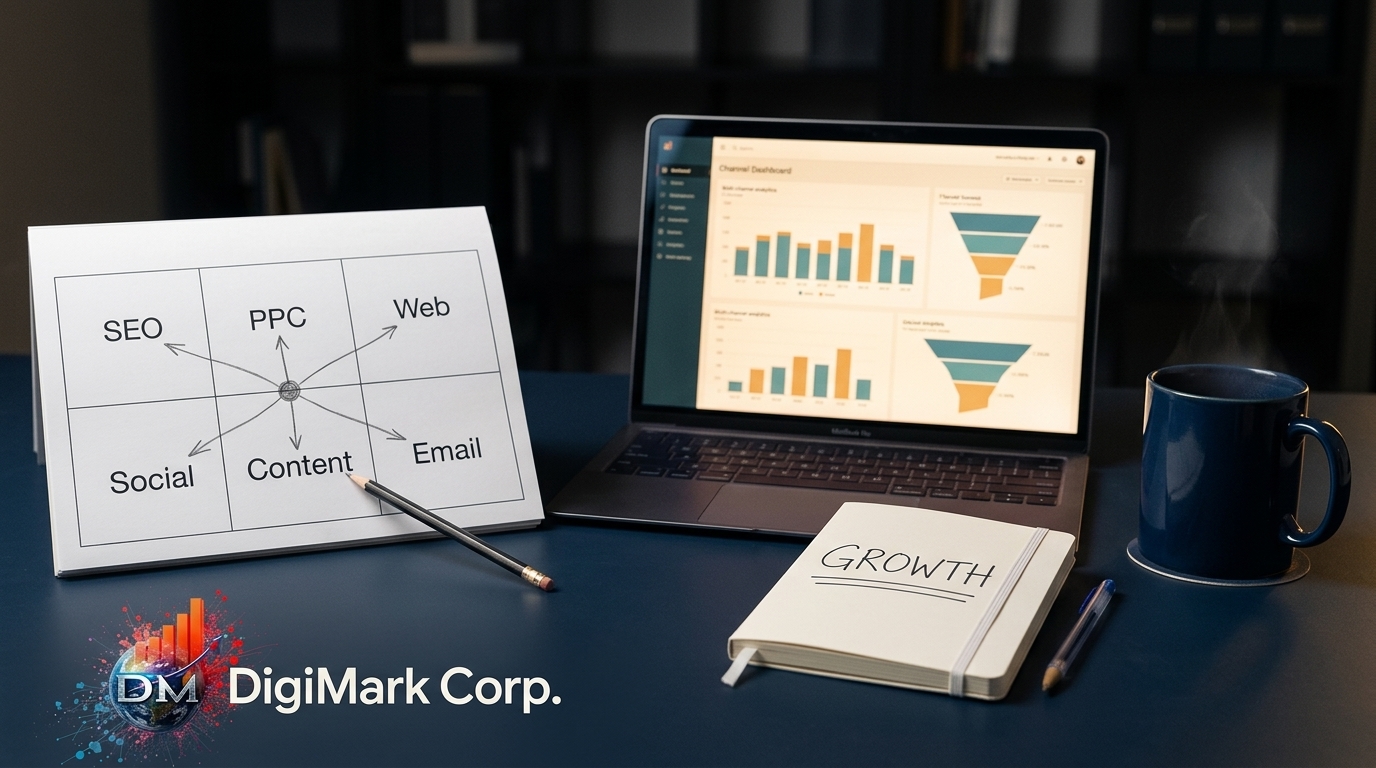
With your strategy in place, you can focus on achieving growth that you can measure and replicate.
The Importance of Marketing Attribution
Understanding which channels drive results is vital. Marketing attribution helps you track the customer journey and identify key touchpoints. This insight allows you to allocate resources effectively, ensuring every effort contributes to growth. It’s an essential tool for any data-driven marketing strategy.
Creating a Customized Growth Marketing Roadmap
A customized growth roadmap is your blueprint for success. It outlines the steps needed to reach your goals, integrating data and strategy. This roadmap keeps you focused and on track, guiding you through the complexities of digital marketing. With this in hand, you’re equipped to make informed decisions that drive growth.
Claim Your Free Integrated Growth Audit
To start turning your marketing into a coherent system, consider an integrated growth audit. This service evaluates your current efforts, highlighting areas for improvement and alignment. It’s the first step towards a strategy that delivers measurable, compounding ROI.
Frequently Asked Questions
What is a unified marketing strategy?
A unified marketing strategy connects all your channels into a single system. It ensures each channel supports your overall business goals, enhancing efficiency and effectiveness.
Why is a digital marketing strategist important?
A strategist ensures each marketing effort aligns with your business objectives. They connect different channels to drive consistent growth and maximize ROI.
How do I measure the success of my marketing strategy?
Success is measured through marketing attribution. This process tracks which channels and efforts contribute most to your business growth.

