
Most businesses don’t lose customers because they’re quiet. They lose them because their marketing channels don’t work together. You might be posting everywhere, yet leads stay stuck—and your growth stalls. When your website, SEO, PPC, social, and email act as separate players, demand slips through the cracks. Building an integrated marketing system changes that: each channel supports the next, driving clearer ROI and steady lead flow toward your goal.
The Myth of More Posting
It’s easy to think that just posting more will solve your marketing problems. But that’s not the real issue.
The Real Growth Barrier
The real barrier to growth is not about how much you post, but how connected your efforts are. When channels like SEO, social media, and email don’t work hand-in-hand, they fail to support your overall goals. You might be busy and active across platforms, yet you still don’t see the leads or sales you expect. Why? Because these efforts aren’t aligned to move users smoothly from one stage to the next.
Why Fragmentation Fails
Fragmentation leads to missed opportunities. A social post might grab attention, but if it doesn’t link to a page that converts, it’s a dead end. Imagine a visitor clicks an ad, lands on a random page, and receives no follow-up email. Each step is a chance lost. This disconnect wastes demand and leaves potential leads unconverted. Most assume that visibility equals success, but without integration, you’re just spinning wheels.
Building a Unified System

To achieve growth, your channels need to work as one.
Strength in Channel Synergy
When each marketing channel supports the other, the result is a powerful force that drives growth. Picture your website, SEO, PPC, and email campaigns acting as a well-oiled machine. Each part plays its role, pushing leads to the next step. This synergy is not just about increasing traffic but also ensuring that each visitor’s journey is seamless, leading to higher conversions. It’s the difference between visitors bouncing and becoming loyal customers.
Mapping the Customer Journey
Understanding the customer journey is key to creating an integrated system. Imagine your customer starting on social media, clicking through to a blog post, and then signing up via a landing page. Each touchpoint should guide them naturally to the next stage. By mapping this journey, you can tailor your efforts to ensure consistency, relevance, and engagement. This coordinated approach turns a casual browser into a committed buyer.
Achieving Marketing Cohesion
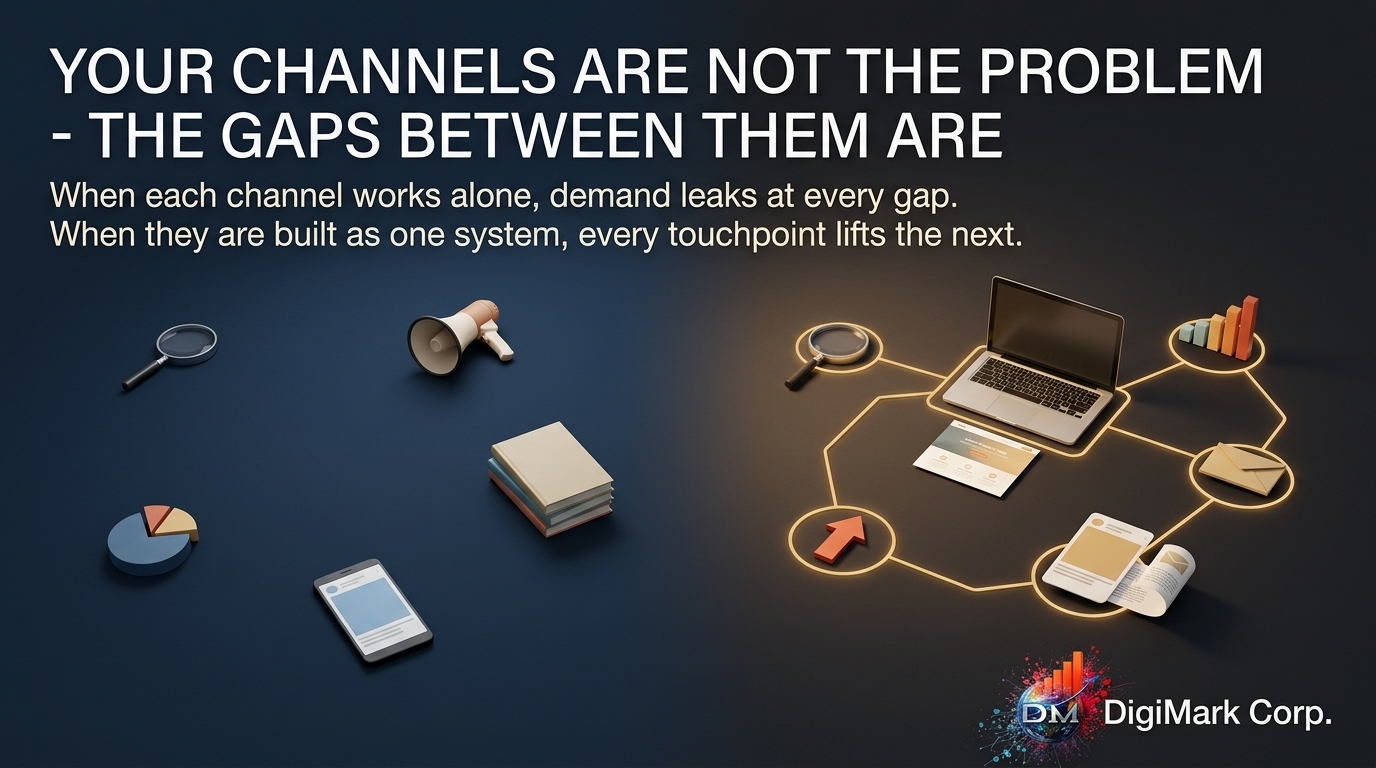
Cohesion across channels not only boosts efficiency but also results in tangible growth.
Steps to Cohesive Campaigns
To create cohesive campaigns, start by ensuring every channel communicates the same message. First, identify your core goal. Then, align each channel to support it. Use consistent branding and language across platforms. Regularly review and adjust your strategies based on performance data to keep everything aligned. This alignment ensures each channel builds on the last, creating a smooth path for your customers to follow.
Benefits of an Integrated System
An integrated marketing system offers significant benefits. It creates a clear path for potential customers, reducing confusion and drop-offs. Your marketing efforts become more efficient, driving higher conversion rates and delivering better ROI. Plus, with each channel reinforcing the others, you’ll see stronger lead flow and faster progress toward your goals. In the end, integration means your marketing not only reaches more people but also truly connects with them.
Frequently Asked Questions
How can I tell if my marketing channels are fragmented?
Look for signs such as inconsistent messaging, separate goals for each channel, and lack of coordination in campaigns. If your channels don’t lead users naturally to a conversion, they could be fragmented.
What is an integrated marketing system?
An integrated marketing system is a coordinated approach where all marketing efforts work together seamlessly. Each channel supports the others to create a cohesive and effective strategy that drives growth.
How can I start building a unified marketing system?
Begin by aligning your goals across all channels. Ensure consistent messaging, and use data to adjust strategies. Regularly map the customer journey to keep all efforts coordinated and effective.

