
Posting on social media grabs attention, but that’s only half the story. Your website is where interest turns into action, yet most businesses see a sharp drop after the click. Without a conversion-ready site, all that social media buzz doesn’t add up to sales. In this post, you’ll learn why treating social engagement and website conversion as one system drives real growth—and how to fix the leaks holding back your leads.
Social Media to Sales
Bridging the Attention Gap
Social media is fantastic for grabbing attention, but what happens after that initial interest? If you’re not converting those clicks into sales, you’re missing out. Most people think just being active on social media is enough. But the key insight is that social media alone doesn’t sell products. It creates interest and visibility. The real work happens when your website picks up where social media leaves off. You need a conversion-ready website to guide visitors through the buying journey.
Crafting a Conversion-Ready Website
When it comes to converting visitors, your website needs to do the heavy lifting. A well-crafted site should have clear paths for users to follow, leading them to make a purchase or sign up. Here’s the key insight: A cluttered website with no distinct call-to-actions can turn potential customers away. You should focus on a clean design, fast load speeds, and intuitive navigation. Each element should serve a purpose: converting visitors into customers. Remember, the more straightforward the process, the better the conversion rate.
Conversion Rate Optimization Myths
Why Activity Doesn’t Equal Sales
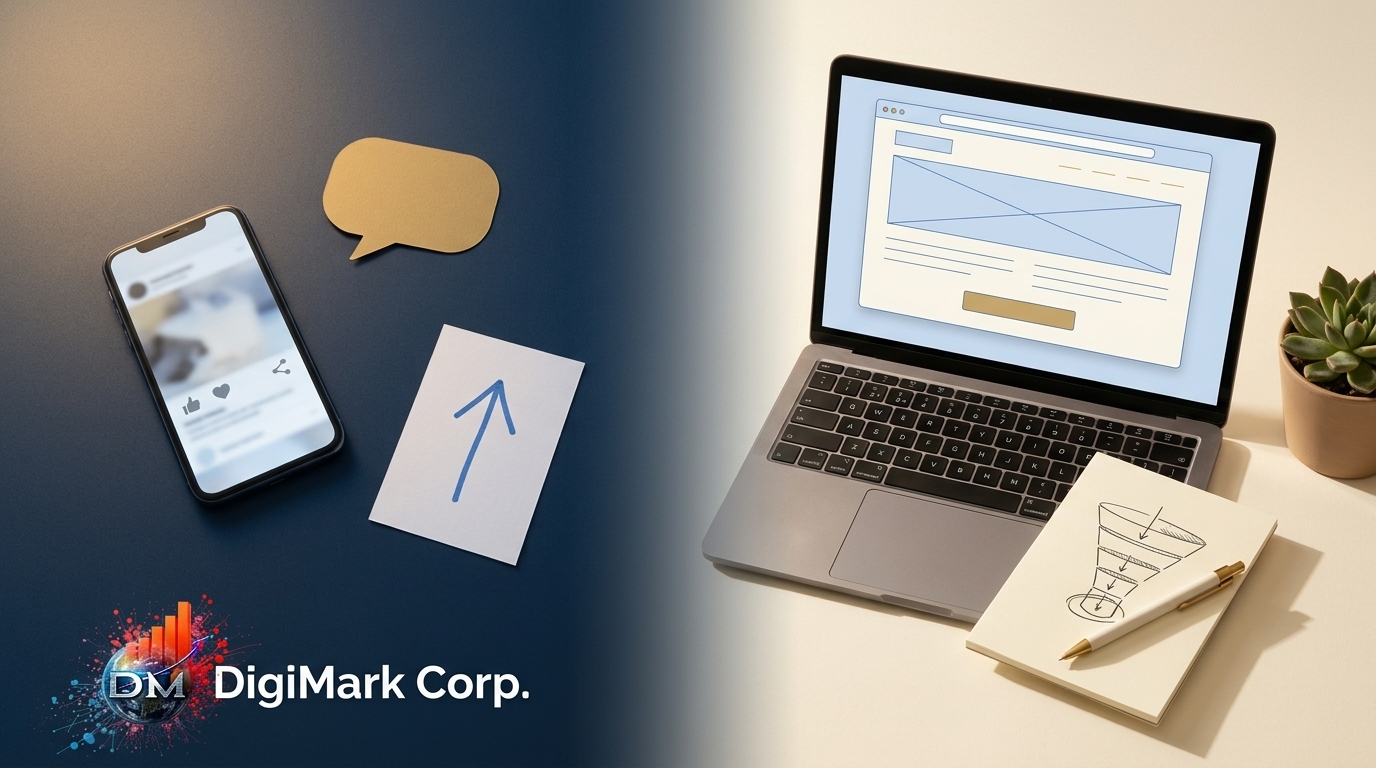
It’s a common misconception that more activity equals more sales. Just because you’re posting frequently doesn’t mean you’re making sales. The reality is, without a strategic approach, those posts might not lead to conversions. The truth is that while social media creates engagement, it doesn’t automatically translate to sales. You need to align your social strategy with your website’s conversion goals. This means designing campaigns that move people from social media to your website, where the conversion happens.
Post-Click Drop-Offs Explained
You’ve done the hard work of getting that click, but what happens next is crucial. Many businesses see users drop off once they reach the site. That’s often because the website isn’t optimized for conversions. If your website doesn’t captivate and guide visitors right away, they’ll leave. The insight here is that even the best social media strategies can fail if your website isn’t up to par. Focus on landing page optimization, where every element is designed to keep the visitor engaged and moving toward a purchase.
Integrated Marketing Systems
Connecting Channels for Growth
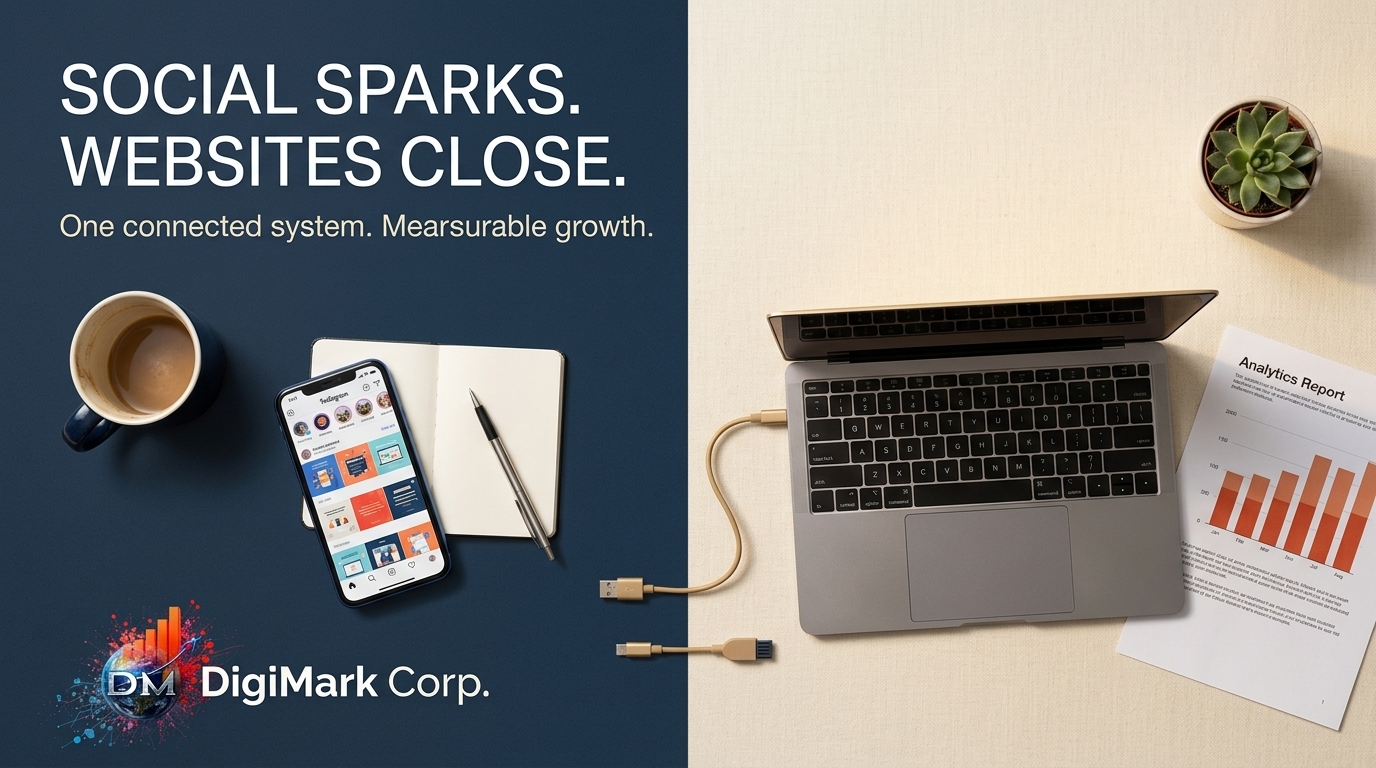
To turn visibility into sales, you must connect your marketing channels. This means your social media and website should work as a seamless unit. Think about it: If your social media posts are engaging but your website isn’t, you’re losing potential sales. When these channels are connected, you create a smooth journey for your customers from awareness to conversion. This not only boosts your sales but also improves your marketing ROI.
Building a Full-Funnel Strategy
Creating a full-funnel strategy is essential for converting social media engagement into sales. This approach ensures that each stage of the customer journey is covered, from initial awareness to final purchase. Here’s the key insight: A disconnected marketing approach can lead to lost opportunities. By integrating your social media, website, and other marketing efforts, you create a cohesive system that guides users every step of the way. This strategy captures demand and increases your marketing effectiveness.
Frequently Asked Questions
How can social media impact sales?
Social media creates awareness and engagement, which is the first step in the sales funnel. However, the conversion typically happens on your website. Without a conversion-ready site, social media activity might not lead to sales.
Why is my website’s conversion rate low despite high traffic?
A high traffic rate with low conversions can indicate that your website isn’t optimized for user engagement or lacks clear call-to-actions. Consider redesigning your landing pages for better flow and clarity.
What is a full-funnel strategy?
A full-funnel strategy involves aligning all marketing efforts to guide customers from the initial awareness stage through to the purchase decision. It ensures that each touchpoint moves users closer to conversion.
How do I connect social media and my website effectively?
Ensure that your social media campaigns are directly linked to relevant landing pages on your website. Use consistent messaging and branding across both platforms to create a seamless experience.
What are some quick improvements for conversion rate optimization?
Focus on improving your landing page design, speed, and clarity of messaging. Make sure your call-to-actions are prominent and easy to follow, and consider using A/B testing to determine what works best.