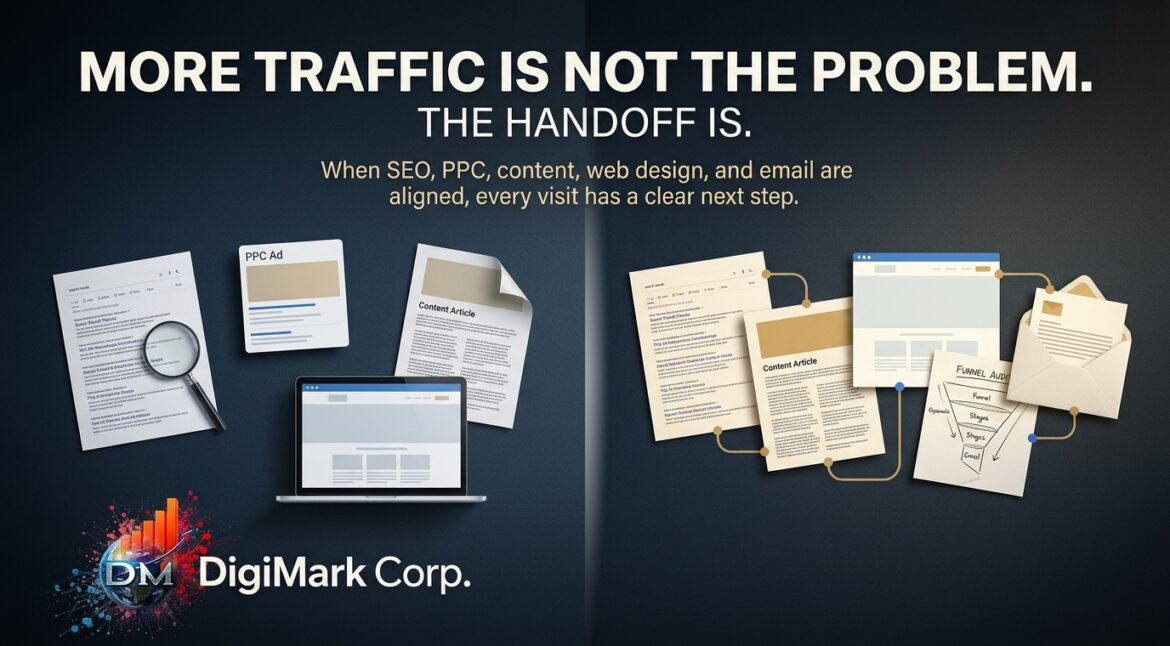
Traffic is climbing, but why aren’t your leads following? The real bottleneck isn’t more clicks—it’s what happens after. When your SEO, PPC, content, web design, and email aren’t working as one, every visitor risks getting lost. At DigiMark Corp, we focus on building a clear conversion path that stops marketing system leaks and turns summer momentum into steady growth. Keep reading to learn where your funnel breaks and how to fix it before the slowdown hits. Learn more.
Identifying Channel Handoff Bottlenecks
When traffic rises but leads lag, the issue often lies in channel handoff. Understanding these breaks can help you fix the problem.
Common Funnel Break Points
Funnel breaks happen when visitors land on a page but don’t know the next step. Many sites attract clicks but fail to guide action. For instance, a landing page may see high visits but no conversions because it lacks clear directions or compelling call-to-action.
Another break point is in follow-up timing. If your team waits too long to engage, potential leads cool off. Immediate engagement can make all the difference. Integrating timely actions like email follow-ups or targeted retargeting can turn interest into action.
Impact of Misalignment on Growth
Misalignment across channels can severely impact growth. When email, content, and PPC don’t sync, efforts often scatter. This lack of coordination means visitors might not find value in your content, affecting conversion rates. Poorly aligned efforts can also waste resources and hurt ROI.
For example, if SEO drives traffic to a page that doesn’t match the PPC message, visitors leave confused. This disconnect hurts trust. A unified message across all touchpoints ensures that each visitor knows exactly what to expect next.
Building an Integrated Marketing System
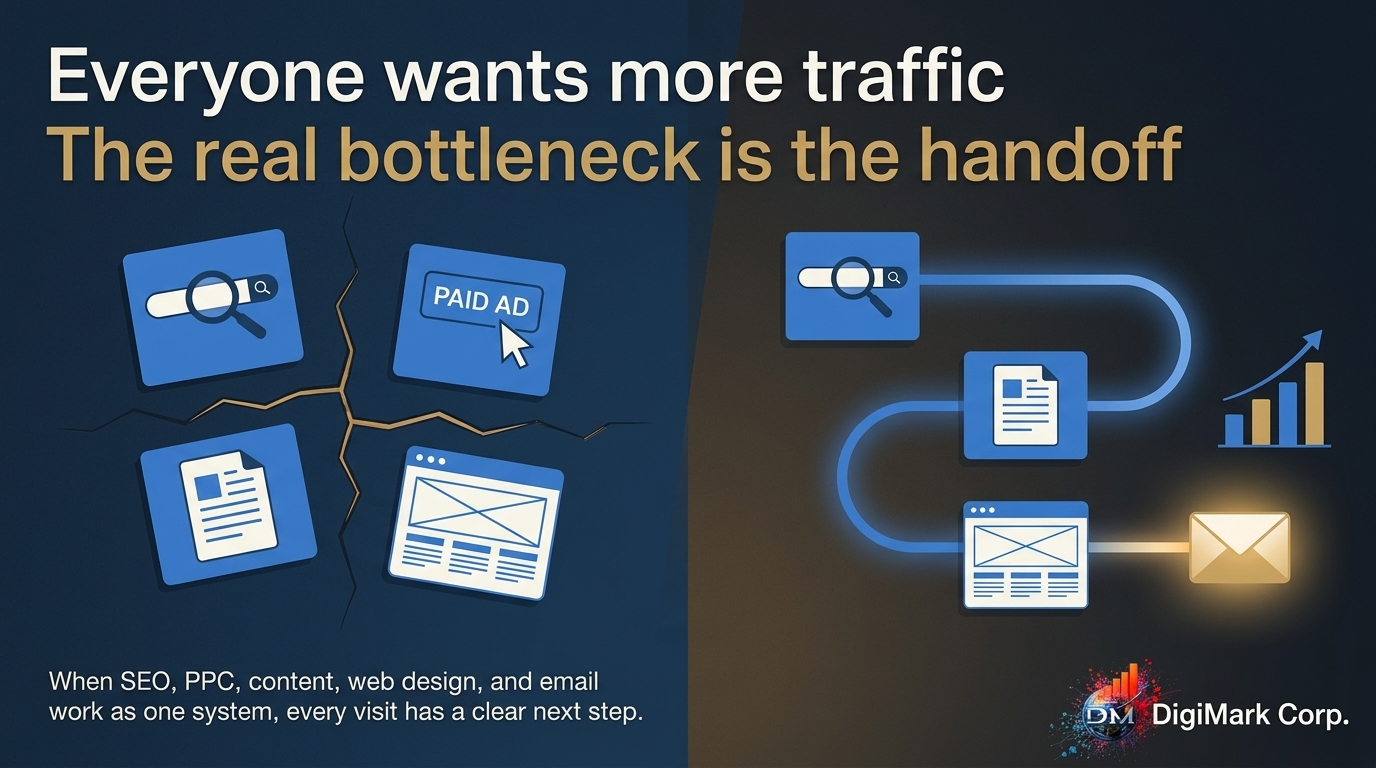
An integrated marketing system is your solution to these bottlenecks. It aligns all your channels to create a seamless visitor experience.
Aligning SEO, PPC, and Content
Aligning SEO, PPC, and content is crucial. When these elements work together, they guide visitors smoothly through your funnel. Start by using consistent keywords across all channels. This helps in creating a unified message. For instance, when someone searches for a solution and finds your ad, the landing page should immediately back up the promise made.
Additionally, ensure that content supports both SEO and PPC by addressing the same pain points. This approach boosts trust and leads to higher conversion rates. Finally, track performance to adjust strategies in real-time for better results.
Enhancing Conversion Path with Web Design
Web design plays a vital role in enhancing the conversion path. A well-designed site keeps visitors engaged. Focus on clear, intuitive navigation. Each page should have a purpose and a clear path to the next action.
Use visuals and headlines that capture attention and direct focus. Your call-to-action buttons should stand out and be easy to find. A/B testing different layouts can also reveal what works best for conversions. Remember, each element on your site should guide visitors toward taking the desired action.
Creating a Smooth Visitor Journey
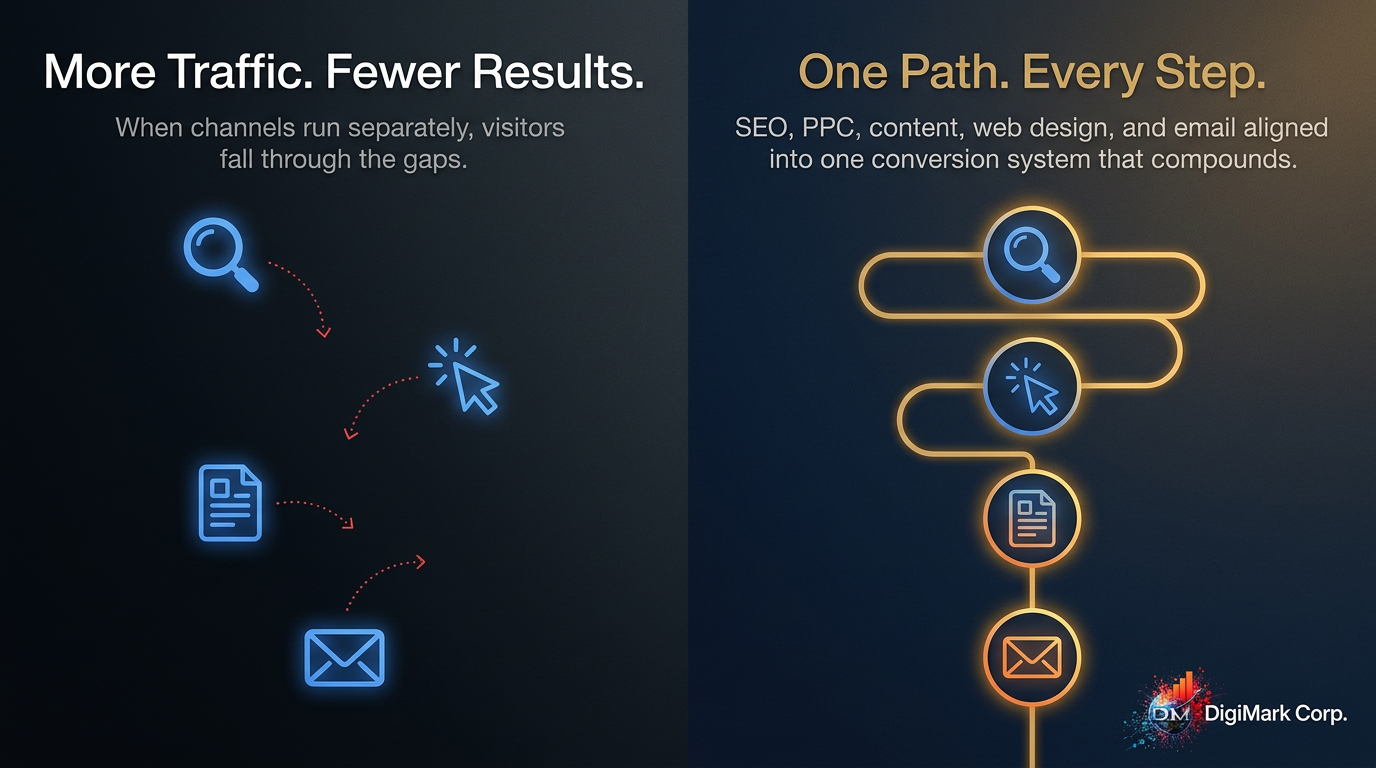
Creating a smooth visitor journey ensures that no one gets lost between channels. It ties the entire experience together.
Mapping Content to Email Handoff
Mapping content to email handoff is a crucial step. Once visitors engage with your content, emails should follow up with relevant information. This continuation keeps them interested and nurtures them toward conversion.
Craft emails that connect directly to the content they engaged with. Offer additional resources or special offers that relate to their interests. This personalized approach can significantly improve your email open and click rates.
Ensuring Effective Lead Nurturing
Effective lead nurturing is about keeping potential customers engaged over time. Set up automated email sequences that provide value and encourage action. Start with a welcome email that sets expectations. Follow up with educational content and offers tailored to their needs.
Use data to refine these sequences. Track what works and adjust your strategy. Remember, nurturing isn’t about pushing for a quick sale. It’s about building a relationship that leads to a decision when the time is right.
Frequently Asked Questions
What is a channel handoff in digital marketing?
A channel handoff refers to the transition of a potential customer from one marketing channel to another. For example, moving from an ad click to a landing page and then to an email sequence. Ensuring smooth handoffs can improve conversions by keeping the visitor engaged.
How can misalignment affect my marketing strategy?
Misalignment in your marketing strategy can lead to wasted resources and poor conversion rates. When channels like SEO, PPC, and content don’t work in harmony, it creates confusion and distrust among potential customers. This can result in visitors leaving before taking any action.
Why is an integrated marketing system important?
An integrated marketing system is important because it ensures all marketing channels work together seamlessly. This alignment creates a cohesive message and smooths the visitor journey, leading to higher conversion rates and better ROI.
How can web design improve my conversion path?
Web design can improve your conversion path by providing a clear and intuitive user experience. Good design guides visitors toward taking desired actions through compelling visuals, clear call-to-action buttons, and easy navigation.
What role does email play in lead nurturing?
Email plays a crucial role in lead nurturing by maintaining contact with potential customers. It delivers relevant content and offers that align with their interests, helping move them through the sales funnel toward conversion.