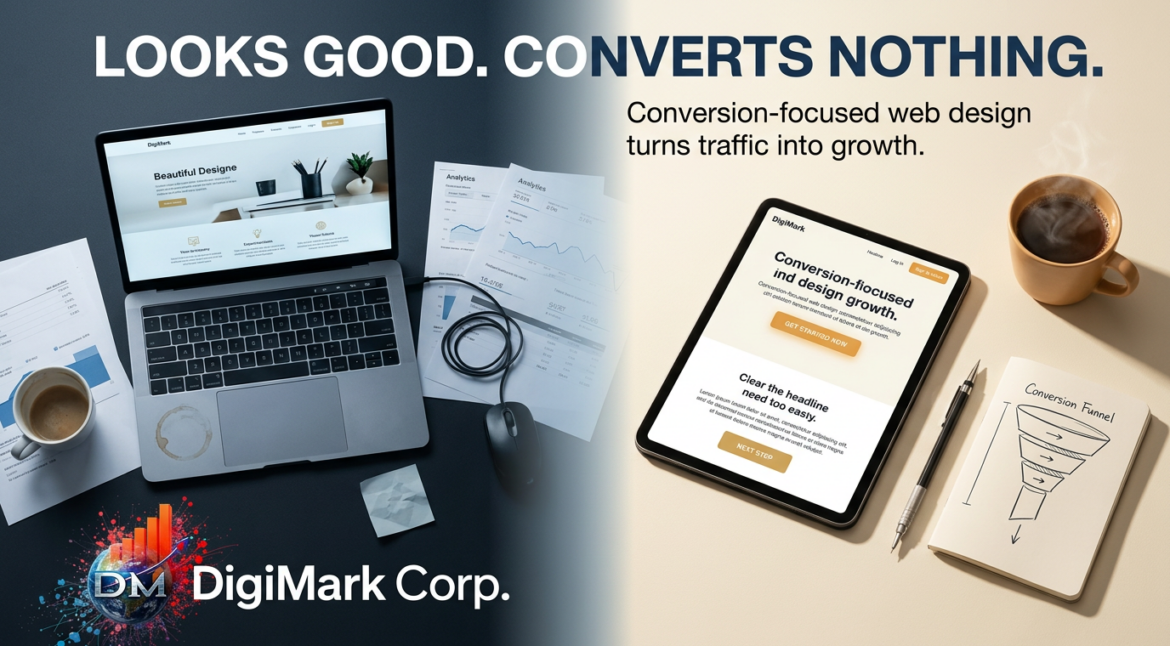
Traffic floods your site, but leads barely trickle in. You’ve spent on SEO, ads, and social campaigns—yet visitors stall instead of converting. This isn’t just frustrating; it’s leaking revenue every day. Conversion-focused web design turns your site from a costly showroom into a powerful sales engine by guiding visitors with clear calls to action and removing barriers. Keep reading to see how to protect every click before quarter end and turn your traffic into real growth. For more insights, check out this guide on increasing conversions.
Hidden Costs of Pretty Web Design
A website that looks good but doesn’t convert is a hidden drain on resources. Your site might attract plenty of visitors, but without conversions, it’s just a pretty facade. Let’s delve into the unseen costs of a site that’s all show and no go.
Traffic Stalls Without Conversions
When your website attracts traffic but fails to convert, every click becomes a lost opportunity. Imagine spending on SEO and PPC only to see visitors leave without taking action. This scenario not only affects your ROI but also hinders growth. The truth is, without a clear path forward, visitors often come and go without a second thought.
Friction Impacting Visitor Flow
Friction is the silent killer of conversions. It can be anything from slow load times to confusing navigation. When visitors encounter obstacles, they’re more likely to abandon their journey. Removing these barriers is crucial to improving flow and keeping users engaged. Remember, a seamless experience is key to turning clicks into conversions.
Clear Calls to Action Missing
The absence of clear calls to action is another common pitfall. Visitors need guidance to take the next step, whether it’s signing up for a newsletter or making a purchase. Without clear instructions, they are less likely to engage. Your site should be a guide, leading users toward meaningful actions.
Conversion-Focused Web Design
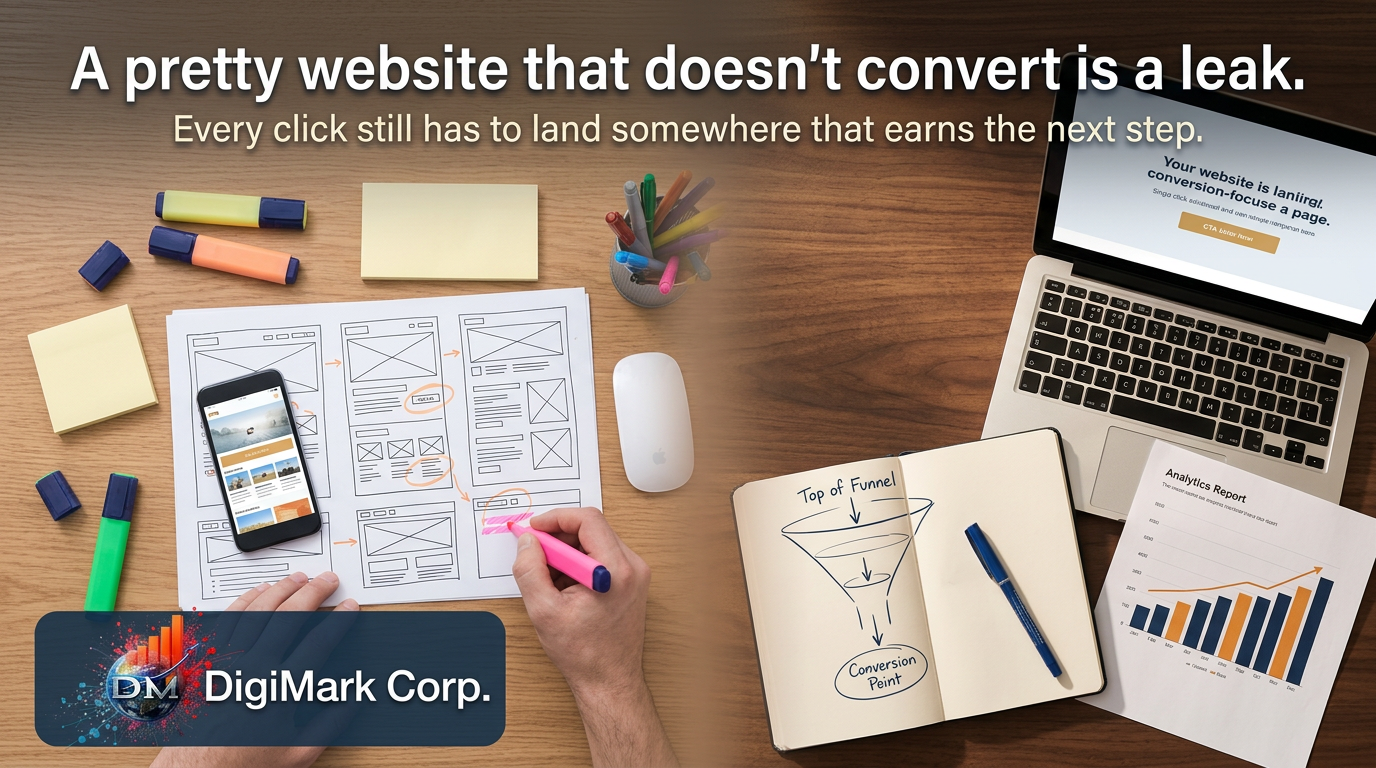
To transform a passive site into a conversion powerhouse, focus on design elements that support decision-making. This approach not only enhances user experience but also drives measurable results.
Decision-Support Design Elements
Design should assist visitors in making informed decisions. This includes clear messaging, intuitive layouts, and strategic placement of information. A site that provides relevant details and answers potential questions helps build trust and encourages action. By focusing on decision-support elements, you can guide visitors toward conversion with ease. Explore more on effective design principles here.
Reduce Friction for Better Flow
Streamlining the user journey is essential for better flow. This means optimizing site speed, simplifying navigation, and ensuring that the most important information is easily accessible. By reducing friction, you make it easier for visitors to move through the site and complete desired actions. A user-friendly experience is a major factor in boosting conversion rates.
Optimize for SEO and PPC Traffic
Your website should be optimized for both SEO and PPC traffic to maximize its potential. This involves using targeted keywords, creating relevant content, and ensuring that landing pages are aligned with ad campaigns. When done right, optimization not only attracts visitors but also converts them into leads. Learn more about conversion-centered design.
Quick Wins for Better Conversion

Implementing a few quick wins can lead to significant improvements in your conversion rates. These strategies are designed to yield fast, measurable results before the quarter ends.
CRO Audit and Landing Page Tips
Conducting a CRO audit can reveal areas for improvement on your site. Focus on refining landing pages by testing different headlines, images, and calls to action. Simple tweaks can make a big difference in capturing leads and driving conversions.
A/B Testing for Better Results
A/B testing is a valuable tool for understanding what works best on your site. By experimenting with different designs and content, you can identify what resonates with your audience. Testing helps you make informed decisions and optimize for better results over time.
Urgent Steps Before Quarter-End
Taking urgent steps to enhance your website’s performance can have a positive impact on your quarterly results. Prioritize changes that offer the most significant potential for improvement. The longer you wait, the more opportunities you miss. For further guidance, check out this detailed conversion-focused redesign process.
Frequently Asked Questions
What is conversion-focused web design?
Conversion-focused web design prioritizes elements that encourage visitors to take action, such as clear calls to action and intuitive navigation. It aims to turn site visitors into leads or customers by providing a seamless user experience.
How can I reduce friction on my website?
To reduce friction, optimize your site’s load speed, streamline navigation, and ensure important information is easily accessible. These adjustments help improve user flow and increase the likelihood of conversion.
What are quick wins for improving conversion rates?
Quick wins include conducting a CRO audit, optimizing landing pages, and implementing A/B testing. These strategies can quickly enhance your site’s effectiveness in converting visitors into leads or customers.
Why are clear calls to action important?
Clear calls to action guide visitors toward taking specific actions, such as signing up for a newsletter or making a purchase. Without them, users may be uncertain about the next steps, leading to missed conversion opportunities.
How does A/B testing improve website performance?
A/B testing allows you to experiment with different designs and content to see what resonates with your audience. By analyzing the results, you can make informed decisions that lead to improved website performance and higher conversion rates.