
Google Sites gets a lot of attention for how fast you can launch a site. If you need something quick to rally your team or meet a last-minute deadline, it’s a solid choice. But when you want to convert visitors, support paid ads, or build real growth, Google Sites limitations start to show. Before Q3 hits, your business needs a clear plan to move beyond basics and turn your site into a lead-generating machine.
Google Sites: Quick Solutions
Google Sites offers quick solutions for businesses needing an immediate online presence. Its strength lies in speed and simplicity, making it a go-to for many.
Speed and Simplicity Benefits
Google Sites makes launching a website fast and easy. You can create a functional site in just a few hours. This platform is perfect when you’re on a tight deadline. Its user interface is straightforward, so even if you’re not tech-savvy, you can navigate and build your site with ease.
The platform’s simplicity is a key benefit, allowing users to focus on content rather than technical details. You won’t need to deal with complex code or installation processes. This makes it ideal for teams needing to share information quickly. Plus, the integration with other Google Workspace tools is seamless, adding to its convenience.
Internal Alignment and Efficiency
Google Sites helps align your team’s efforts by offering a centralized platform. It’s a great tool for internal collaboration. It keeps everyone on the same page with shared documents and updates. This efficiency can be a game-changer when you need rapid coordination.
The platform supports team alignment by integrating easily with Google Drive and Calendar. This integration ensures all resources are accessible and up to date. Plus, the real-time editing feature means everyone can see changes as they happen, reducing confusion and improving communication.
Google Sites Limitations
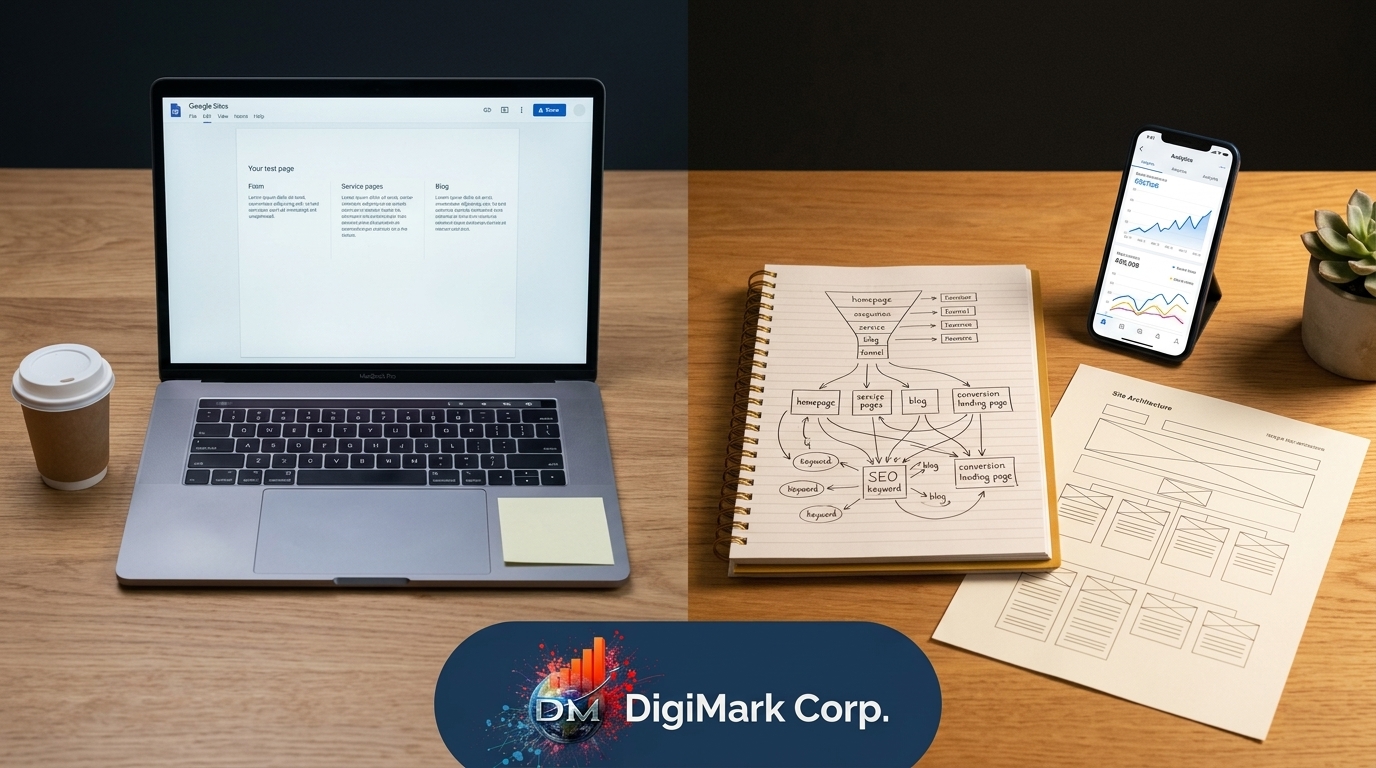
Despite its strengths, Google Sites has significant limitations that can impact your business growth. Let’s explore these challenges and how they may affect your strategy moving forward.
SEO Challenges and Opportunities
Google Sites presents challenges for those looking to enhance their SEO. Limited customization options can hinder your site’s optimization potential. This can affect your search rankings significantly. To improve, consider focusing on content quality and using basic SEO practices.
While options for technical SEO are restricted, you can still leverage content to boost visibility. Use relevant keywords naturally within your content. Incorporate schema markup to help search engines better understand your site. For more advanced SEO needs, you might need a more flexible platform.
Conversion Rate Considerations
Conversion rate optimization is another area where Google Sites can fall short. The platform’s design limitations might not support the best practices for converting visitors into leads. This can impact your ability to generate meaningful business growth.
To improve conversions, focus on user-friendly design and compelling calls to action. Consider A/B testing different layouts and messages to see what resonates. However, be aware that for more robust testing and analytics, you might need to migrate to a platform with more advanced capabilities.
Preparing for Q3 Success
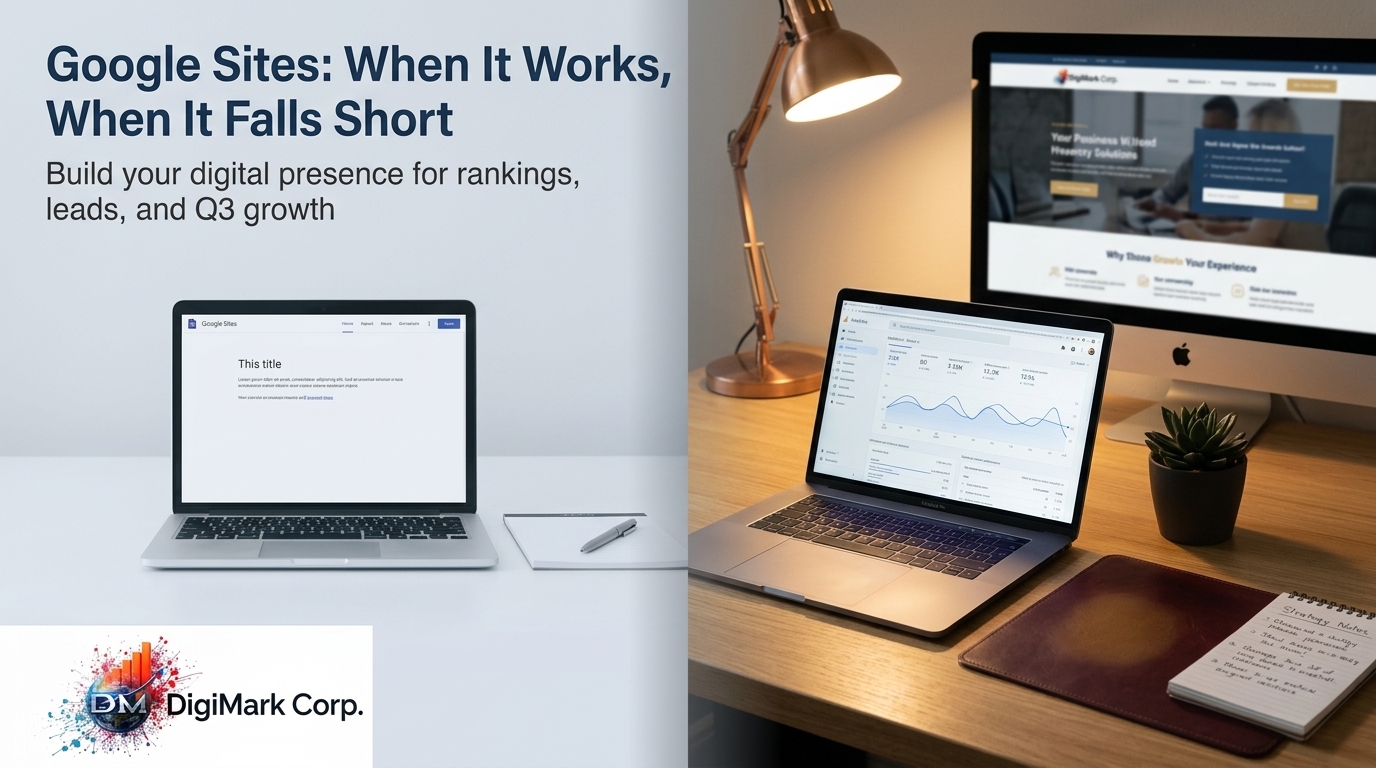
As Q3 approaches, planning becomes crucial. Evaluating your website options and crafting a strategic marketing plan will set the stage for success.
Evaluating Website Migration Options
If you’re considering moving from Google Sites, it’s essential to evaluate your options carefully. Platforms like WordPress offer more flexibility for SEO and conversion optimization. They also provide extensive analytics dashboard capabilities to track your site’s performance.
Migration might seem daunting, but the benefits often outweigh the costs. Enhanced design options, better SEO tools, and improved conversion tracking are just a few advantages. Consider what platform aligns best with your business goals and technical needs.
Crafting a Comprehensive Q3 Marketing Plan
A well-rounded marketing plan is essential to drive growth in Q3. Focus on a strategy that aligns with your business goals and market trends. Integrate multi-channel marketing efforts to reach a wider audience and boost engagement.
Include both organic and paid tactics in your plan. Investing in PPC landing pages can enhance your lead capture capabilities. Your plan should also focus on leveraging analytics to adjust and refine strategies as needed. This approach ensures that your marketing efforts are both proactive and responsive.
Frequently Asked Questions
How do I improve SEO on my Google Site?
Improving SEO on Google Sites involves focusing on high-quality content and using keywords effectively. You can also use schema markup to help search engines understand your site better.
What are the main limitations of Google Sites?
Google Sites’ main limitations include restricted SEO features, limited design flexibility, and basic analytics. These can impact your ability to optimize for search and enhance conversion rates.
Why should I consider migrating from Google Sites?
Migrating from Google Sites can provide more flexibility for customization, SEO optimization, and conversion tracking. Platforms like WordPress offer enhanced features that can support better business growth.
How can I boost conversions on my Google Site?
To boost conversions on Google Sites, focus on a user-friendly design and clear calls to action. Testing different layouts and messages can also help improve conversion rates.
What should be included in a Q3 marketing plan?
A Q3 marketing plan should include a mix of organic and paid strategies, multi-channel marketing efforts, and a focus on analytics. This ensures a comprehensive approach to reach and engage your target audience effectively.